
When Does a Home Need Repiping?
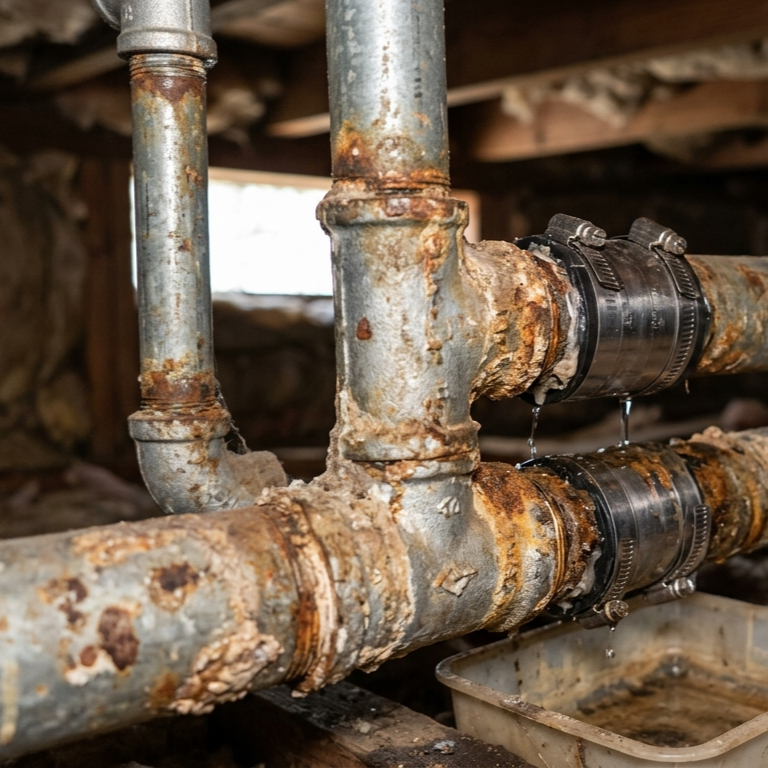
Quick Answer: A home needs repiping when its pipes are failing throughout rather than in one spot — signaled by recurring leaks, rusty or discolored water, persistently low water pressure from corroded pipes, repeated repairs in different places, and old or outdated pipe materials nearing the end of their life. Repiping replaces the home's old, failing pipes with new ones. It makes sense when the pipe problems are widespread and recurring, since patching one leak after another on deteriorating pipes just delays the inevitable and costs more over time. Isolated problems on otherwise sound pipes are repairs; whole-system deterioration calls for repiping. If you're seeing repeated leaks, rusty water, or failing old pipes, it's worth having them evaluated.
Plumbing pipes don't last forever, and at some point, patching one leak after another stops making sense — the pipes themselves need replacing. That's repiping: replacing a home's old, failing pipes with new ones. Knowing when a home actually needs repiping, versus when a repair will do, helps you stop throwing money at a failing system and address the real problem. Here's how to tell when repiping is the answer.
Repair vs. Repipe: The Key Distinction
The fundamental question is whether the pipe problems are isolated or widespread. A single leak or issue on otherwise sound pipes is a repair — fix that spot and move on. But when the pipes are failing throughout the home — recurring leaks in different places, deterioration across the system, old materials reaching the end of their life — repiping is the answer, because patching individual spots on pipes that are failing everywhere just postpones the next failure. So it's not about one problem; it's about the overall condition of the pipes. When the whole system is deteriorating, replacing the pipes addresses the root issue rather than chasing symptoms. The signs below indicate when pipes have reached that point.
Sign One: Recurring Leaks
One of the clearest signs a home needs repiping is recurring leaks — not one leak, but repeated leaks happening in different places over time. When you fix one leak only for another to appear elsewhere, it indicates the pipes are deteriorating throughout, not just failing at a single point. Each new leak on aging, failing pipes is a sign that the whole system is reaching the end of its life. So a pattern of repeated leaks, especially in different locations, is a strong indicator that repiping — replacing the failing pipes — is more sensible than continuing to patch them one at a time. Recurring leaks are the pipes telling you they're worn out.
| Sign | What it indicates |
|---|---|
| Recurring leaks in different spots | Pipes failing throughout |
| Rusty or discolored water | Corroding pipes |
| Persistently low water pressure | Corrosion/scale narrowing pipes |
| Repeated repairs over time | Whole system deteriorating |
| Old/outdated pipe materials | Pipes nearing end of life |
Sign Two: Rusty Water and Low Pressure
The condition of your water and pressure points to the pipes' health. Rusty, brown, or discolored water — especially if it's not from a single fixture or a temporary supply issue — can indicate corroding pipes, where the inside of aging metal pipes is rusting and shedding into the water. Persistently low water pressure throughout the home can also point to the pipes: as older pipes corrode and accumulate internal scale, they narrow, restricting flow and reducing pressure. So discolored water and chronic low pressure can be signs that the pipes themselves are deteriorating from the inside, which points toward repiping rather than a simple fix. These signs reflect the internal condition of the pipes that patching can't address.
Sign Three: Old Pipes and Repeated Repairs
Two more indicators round out the picture. Old or outdated pipe materials matter — pipes have a service life, and aging pipes or certain older materials nearing the end of their life are candidates for replacement, especially when combined with the other signs. And a pattern of repeated plumbing repairs in different places over time signals that the system as a whole is failing, not just having isolated issues. When you find yourself calling for repair after repair on aging pipes, the cumulative cost and hassle often make repiping the more sensible long-term choice. So old pipes plus a history of repeated repairs strongly suggest the pipes have reached the point of needing replacement.
Track your plumbing repairs and the age and material of your pipes. If you've had multiple leaks in different spots, your water is rusty, or your pipes are old and outdated, add up what you're spending on repairs and weigh it against repiping. A pattern of failures on aging pipes is often the clearest sign it's time to replace them.
Why Repiping Beats Endless Patching
The reason repiping makes sense for failing pipes is that patching a deteriorating system is a losing game. Each repair addresses one spot while the rest of the pipes continue to fail, so you keep paying for repairs and dealing with leaks, water damage, and disruption — and the next failure is always coming. Repiping replaces the failing pipes with new ones, resolving the underlying problem for the long term rather than chasing symptoms. While repiping is a bigger project than a single repair, it's often the more economical and less stressful choice when the pipes are widely failing, because it stops the cycle of recurring problems. So matching the solution to the situation — repairs for isolated issues, repiping for whole-system failure — is what saves you money and trouble. A plumber can evaluate the condition of your pipes and advise whether repairs will suffice or repiping is warranted.
Frequently Asked Questions
A home needs repiping when its pipes are failing throughout rather than in one spot — signaled by recurring leaks in different places, rusty or discolored water, persistently low pressure from corroded pipes, repeated repairs over time, and old or outdated pipe materials nearing the end of their life. Repiping replaces the failing pipes with new ones, which makes sense when the problems are widespread rather than isolated.
A repair fixes an isolated problem on otherwise sound pipes — one leak, one spot. Repiping replaces the home's old, failing pipes with new ones, which is the answer when pipes are deteriorating throughout the system. The distinction is whether the problem is isolated (repair) or the whole system is failing (repipe). Patching individual spots on widely failing pipes just postpones the next failure.
It can be. Rusty, brown, or discolored water — especially if it's not from a single fixture or a temporary supply issue — can indicate corroding pipes, where aging metal pipes are rusting internally and shedding into the water. Combined with other signs like recurring leaks or low pressure, rusty water points toward pipes deteriorating from the inside, which suggests repiping rather than a simple fix.
Yes. As older pipes corrode and accumulate scale internally, they narrow, which restricts water flow and drops the pressure throughout the home. So, persistently low water pressure can be a sign that the pipes themselves are deteriorating from the inside. When low pressure accompanies other signs like rusty water or recurring leaks, it points toward repiping, since you can't clear the scale out of a whole corroded system.
Because patching a deteriorating system is a losing game — each repair fixes one spot while the rest of the pipes keep failing, so you face leak after leak, water damage, and recurring costs, with the next failure always coming. Repiping replaces the failing pipes and resolves the problem for the long term. When pipes are widely failing, repiping is often more economical and less stressful than endless patching.
Pipes have a service life, and aging pipes or certain older materials nearing the end of their life are candidates for replacement, especially with other signs present. If you know your pipes are old or an outdated material, and you're seeing recurring leaks, rusty water, or low pressure, that combination suggests the pipes are reaching the end. A plumber can evaluate the pipes' age, material, and condition to advise.
Replace Failing Pipes, Don't Just Patch Them
A home needs repiping when its pipes are failing throughout — shown by recurring leaks in different spots, rusty water, chronic low pressure from corrosion, repeated repairs, and old, outdated materials. Repiping replaces the failing pipes, resolving the problem for good, whereas patching a deteriorating system just delays the next failure and costs more over time. Isolated issues are repairs; whole-system failure calls for repiping. If the signs are adding up, have your pipes evaluated.
Recurring leaks, rusty water, or old failing pipes? — Get your pipes evaluated to find out whether repairs or repiping is the answer. Done Right Drains and Plumbing serves Chula Vista, San Diego, National City. Call (619) 737-3274.
