
Repair or Replace: How to Tell When a Water Heater Is Truly Done
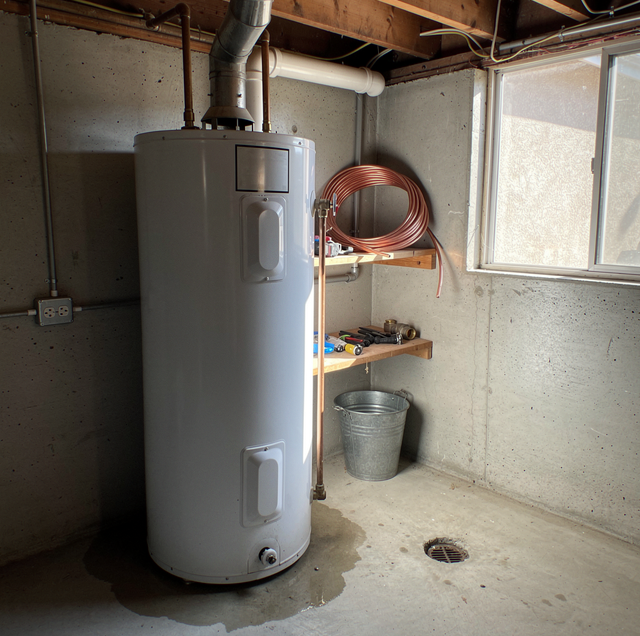
A water heater rarely fails all at once. It usually sends a string of smaller signals first: a pilot that won't stay lit, a burst of lukewarm water, a strange noise from the tank, a repair bill that shows up for the second or third time in a year. Each one on its own can look like a minor fix. Strung together, they begin to ask a bigger question: is this unit worth saving, or is it quietly working its way toward the end?
There is no single rule that answers that question for every household, because a lot depends on how old the unit is, what has already gone wrong with it, and what kind of failure you are actually looking at. Some problems are cheap and quick, and they leave the tank as good as it was. Others are a sign that the tank itself has reached the point where no repair holds for long. This guide walks through the factors that separate a fixable heater from one that is done.
Age And Warranty Status Set The Baseline
Before you weigh any repair, find out how old the unit actually is and whether it is still covered. Most tank-style water heaters carry a manufacture date encoded in the serial number on the rating plate, and most manufacturers set a tank warranty somewhere between six and twelve years depending on the model and tier. That warranty period is a rough proxy for how long the manufacturer expects the tank to hold up under normal use, so it is a reasonable starting point for the repair-or-replace math.
A unit still inside its tank warranty, especially in its first several years, is usually worth repairing almost regardless of what broke. A thermostat, a heating element, a gas valve, or a fitting failing early is often an isolated part problem rather than a sign that the whole unit is wearing out, and labor is usually the only real cost, since parts may be covered. A unit that has aged past its warranty window and is showing its first real need for repair is a different conversation, because now you are deciding whether to spend money keeping an uncovered, aging tank running.
Tankless units complicate this slightly since they do not hold a tank of water and are not subject to internal tank corrosion, but they still have a heat exchanger, sensors, and a warranty clock of their own, often longer than a tank-style unit's. The core logic still applies: know the age and the warranty status, and treat those two facts as the frame within which the rest of the decision sits.
Watch The Repair Frequency And Cost Trend
One repair is a data point. A pattern of repairs is a trend, and the trend matters more than any single visit. A unit that needed one small fix two years ago and has otherwise run without issue is behaving normally. A unit that has required a technician to address a different problem on each of the last two or three service calls is telling you that its components are wearing out together, not in isolation.
Track what has actually failed and when. A heating element, a thermocouple, a gas valve, a circulation pump, and a pressure relief valve are separate parts with distinct failure points, and each one failing once over a decade is unremarkable wear. Multiple parts failing within a short stretch, especially within a year or two of each other, points to a unit aging out as a system rather than losing parts one at a time. The direction of the trend line, not the size of any one repair, is the signal worth paying attention to.
There is also a practical ceiling to apply: if the cost of keeping a unit running starts to approach what a chunk of a new unit would cost, the repair stops being the obviously cheaper choice. That comparison only makes sense when you also factor in how much life the unit likely has left, which is where age and repair history come back into the calculation together.
Corrosion And Sediment Buildup Are The Hard Stop
Some failures are repairable no matter how old the unit is. Corrosion inside the tank itself is not one of them. Water heater tanks are lined with glass to protect the steel shell, and a sacrificial anode rod is built in to corrode in place of that steel. Once the rod is fully consumed and the lining has been breached in a spot, the bare steel underneath starts rusting from the inside, and that process does not reverse. A tank leaking from a seam, a weld line, or its own body, rather than from a fitting or valve, has reached that point. No sealant, clamp, or patch holds reliably against water held under pressure, and heated day after day, so once corrosion has broken through the tank, replacement is the only real path forward.
Sediment tells a related but slightly different story. Minerals in the water settle to the bottom of the tank over years of use, and hard water speeds this up considerably. A thick sediment layer insulates the water from the burner or heating element, so the unit has to work harder and run longer to reach the same temperature. That extra cycling shows up as popping or rumbling noises as trapped water boils under the sediment layer, and it also stresses the tank and its components faster than clean operation would. Flushing a tank regularly slows this buildup, but a tank that has gone years without a flush and is already rumbling loudly has likely accumulated damage that a single flush will not undo. When corrosion shows up on the outside, heavy sediment buildup is one of the strongest signs that a unit's working life is coming to an end.
The Efficiency Case For A New Unit
Age costs efficiency even when nothing has visibly broken. Insulation around older tanks tends to be thinner than what current models use, so standby heat loss, the energy spent just keeping stored water hot between uses, is higher on an aging unit. Burners and heating elements lose some of their original efficiency as they age and as sediment interferes with heat transfer, so an older unit spends more energy heating the same amount of water than it did when new.
Newer tank units generally use thicker insulation and improved burner or element designs that reduce standby heat losses. Tankless and hybrid heat-pump units go further, heating water only as it is used or moving heat rather than generating it directly, which can meaningfully cut the energy a household spends on hot water over a year. None of that means every failing unit should be replaced purely for efficiency; a young unit with one fixable problem is still the cheaper and smarter call. But when a unit is already near the end of its expected life and needs a real repair, the efficiency gain from a new unit is a legitimate factor tilting the decision toward replacement rather than a bonus you can ignore.
Weighing A Cheap Repair Against A Unit Near The End
The hardest cases are not the obvious ones. An early-life unit with one clear failure is an easy repair call, and a corroded, leaking tank is an easy replacement call. The gray zone sits in between: a unit well into or past the middle of its expected lifespan that needs a moderate repair which is not itself a hard stop.
A ten-year-old car that needs a transmission rebuild costing most of what the car is worth invites the same math as an aging water heater needing a repair that costs a meaningful share of a new unit's price: the part being fixed may work fine afterward, but everything around it is the same age and just as likely to be next. Ask what else on the unit is the same vintage as the part that just failed. Ask whether this is the first repair or the third. Ask whether the warranty has already lapsed, so any next failure is fully out of pocket. A cheap, isolated repair on a unit with a clean history is worth doing even late in its expected lifespan. A repair that is neither cheap nor isolated, on a unit that has already required attention more than once, is usually the point at which continuing repairs stop being the more economical choice, even before the tank itself has failed outright.
When To Bring In A Professional For An Assessment
None of these factors are meant to be judged from a single symptom in isolation, and some of them, like reading a serial number's date code or telling sediment noise apart from a failing part, are easier with a trained eye on the unit. A plumber can pull the age off the rating plate, check the anode rod and tank condition, look at what has already been repaired, and give a straight answer on whether a given fix is worth doing or whether the unit has reached the point where a new one is the better investment. Gas connections, venting, and pressure-relief components in particular are not areas to guess on, so any assessment that touches those should involve a professional rather than a DIY diagnosis.
Frequently Asked Questions
Yes, if the fix is a single inexpensive part and the tank shows no corrosion or heavy sediment. A gas valve, a thermocouple, or a heating element failing in isolation on an otherwise sound tank is usually still cheaper to replace than the whole unit, even with the warranty expired, as long as it is the first such repair rather than one of several.
Yes. The heat exchanger inside a tankless unit can develop mineral scale from hard water and eventually crack or corrode, and once that happens, the exchanger itself, not just a sensor or igniter, has failed. Because the exchanger is one of the more expensive components in the unit, a cracked or badly scaled exchanger on an older tankless unit often tips the math toward replacement rather than a component-level repair.
Manufacturers commonly recommend flushing a tank once a year, and skipping that for several years in a hard-water household can measurably shorten the tank's lifespan, since the trapped layer forces the lower section to run hotter than the surrounding water for longer stretches. That thermal stress on the tank's lower seams is part of why heavily neglected tanks tend to develop corrosion leaks earlier than well-maintained ones of the same age.
Only partially. Flushing sediment and replacing a spent anode rod can bring a tank back closer to how it ran when newer, but the tank's insulation and the burner or element's original efficiency rating do not improve with a repair. A flush and rod replacement slow further efficiency loss; they do not reverse the efficiency gap between an aging tank and a current model.
Shut off the cold water supply valve feeding the tank and cut power at the breaker for an electric unit or turn the gas control to off for a gas unit before anything else. That stops the leak from getting worse and removes the energy source from standing water, and it buys time to get a proper assessment rather than forcing a same-day decision under pressure.
Usually not by default. Most manufacturer warranties cover the tank and named parts but not the labor to remove the old unit and install the new one, though some installers offer a separate labor warranty on top of the manufacturer's parts coverage. It is worth asking specifically whether labor is included, since assuming the manufacturer's warranty covers the full job is a common source of later surprise.
Get an honest repair-or-replace assessment — find out whether your water heater is worth fixing or ready for a new one. Done Right Drains and Plumbing serves Chula Vista, San Diego, and National City. Call (619) 737-3274.
