
Signs Your Sewer Line Is Failing Before It Backs Up
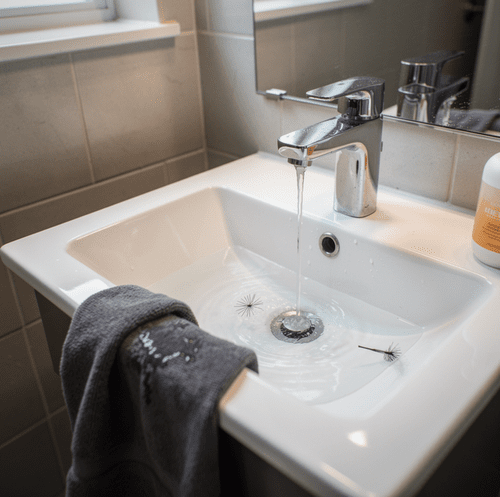
The kitchen sink drains more slowly than it used to, but so does the bathtub, and now the toilet gurgles when the washing machine empties. None of it seems urgent on its own. Taken together, though, that pattern usually means something more than a single stubborn clog. It means the main line carrying wastewater away from the house is starting to lose the fight against roots, age, corrosion, or a low spot that never quite empties.
Sewer lines fail slowly, then all at once. The slow part is where you have options: a camera inspection, a cleaning, a targeted repair. The all-at-once part is a backup in the lowest drain in the house, or a section of yard that suddenly needs a real excavation. Catching the signs early is what keeps this a scheduled repair instead of an emergency.
Slow Drains Throughout the House Point to the Main Line
A single slow drain is a local problem: hair in the bathroom sink, grease in the kitchen line, a toy stuck in the toilet trap. When every drain in the house is sluggish at the same time, the fixtures aren't the problem. They all share one downstream path, the main sewer line, and if that line is partially blocked, everything upstream of it backs up a little, no matter which fixture you're using.
The tub and the lowest-level floor drain usually show it first, since they sit closest to the main line's low point and have less fall to work with. If you run water in an upstairs bathroom and see bubbles or a slow drain in a downstairs shower, that's the plumbing telling you the two fixtures are connected through a shared bottleneck.
Gurgling and Bubbling Are the Line Talking Back
That gurgle you hear when the dishwasher drains is trapped air escaping past a restriction, not just a noisy pipe. Every drain line relies on venting to let air in behind the water as it flows out; when a partial blockage in the main line disrupts that airflow, the water has to push air backward through the nearest trap to equalize pressure, and it bubbles up through standing water in a sink or toilet on its way.
Run water in one fixture at a time and listen at the others. If a toilet or floor drain gurgles every time you run another fixture, that's a strong sign the restriction is downstream of both, in the shared line rather than in one branch.
Occasional gurgling during a heavy load of laundry can be minor. Gurgling that happens with almost every use, especially paired with slow drainage, points to a blockage that's built up enough to matter.
A Sewage Smell Indoors Can Mean a Crack or Separated Joint
Drain lines are supposed to be sealed systems. Water in each trap forms a barrier that keeps sewer gas from working its way back up into the house. When you smell sewage indoors, and it isn't coming from a dry trap (a floor drain that hasn't seen water in months will do this too), rule out the more common culprits first: a toilet's wax ring or closet flange seal that's failed, or a vent stack that's cracked, disconnected, or blocked above the roofline. Either one allows sewer gas to escape without damaging the sewer line itself. Once those check out, a crack or separated joint in the line itself becomes the more likely explanation, letting gas escape somewhere between the fixture and the point where the line leaves the house.
A similar principle applies underground. A home built on a slab has drain and supply lines running through or beneath that concrete, and a break in either type of line reads differently: a water line leak under a slab shows up as unexplained water use and, when it's the hot-water line, warm spots on the floor, while a sewer line break tends to show up as smell and soft ground rather than a water bill spike. Sorting out which pipe is involved is exactly what leak detection and sewer camera inspections are for, since guessing wrong can mean opening the wrong section of the floor or yard.
Soggy Ground or a Too-Green Patch Signals an Underground Leak
Wastewater is nutrient-rich, so a leaking sewer line acts like a slow-motion fertilizer drip. If one strip of lawn stays damp for days after everything else has dried out, or if it grows noticeably greener and faster than the grass around it, that's often runoff from a cracked pipe below. A patch that stays wet after everything around it has dried out stands out fast, because there's nothing else keeping it that way.
Soft, spongy ground you can press a boot heel into, especially along the path between the house and the street, is worth paying attention to for the same reason. It usually means water has been saturating the soil from below for a while, not just after a storm.
Repeated Backups Aren't Bad Luck, They're a Pattern
One backup can be almost anything: a wipe flushed by accident, a toy, a root hair that finally caught enough debris to plug the line. A second backup in the same spot within a few months is a pattern, not a coincidence, and clearing it with a snake or a plunger only buys time if the cause underneath is still there.
Repeated backups, especially ones that show up in the lowest fixture first (a basement floor drain or a ground-floor shower), mean the line has a standing restriction that keeps rebuilding itself. Hydro jetting can clear scale, grease, and root mass more completely than a cable snake, but if the pipe itself has a crack, a belly, or a joint that's pulled apart, jetting only resets the clock until debris collects there again.
Tree Roots Find Every Crack and Joint
Tree roots don't punch through solid pipe. They follow moisture, and a sewer line leaking even a small amount of water and warmth is exactly what a root system is built to find. Once a root works its way into a hairline crack or a loose joint, it doesn't stop growing just because it's inside a pipe; it thickens, branches, and eventually forms a mass that snags paper and waste, then chokes the line down to a fraction of its original diameter.
This is also why the same line can clog a few weeks later after being cleared. Cutting the roots out removes the blockage but not the crack that invited them in, so cleaning without addressing the point of entry is a short-term fix on a line that needs the entry point repaired or the section replaced.
Pipe Age, Material, and Corrosion Set the Clock
Not all sewer pipe is built the same, and the material tells you a lot about how much time is left. Clay pipe, common in older construction, is corrosion-resistant but brittle, and shifting soil can crack it. Cast iron holds up structurally but corrodes from the inside as hydrogen sulfide gas in wastewater reacts with the pipe wall over years, thinning it until it flakes or perforates. Orangeburg pipe, a tar-paper composite used for a stretch of decades last century, simply loses its shape over time and can collapse into an oval that chokes off flow long before it fully fails.
Aging sewer lines don't send one clear signal that they're done. Instead, they send a string of smaller ones: slower drainage, more frequent clogs, the odd smell after a dry stretch. A line that's reached the end of its material life is a strong argument for replacement rather than another round of clearing, since clearing a corroded or collapsing pipe doesn't restore the pipe wall that's actually failing.
Bellies, Settling, and Sinkholes Show How Far Damage Has Gone
A sewer line is supposed to run on a steady, slight downhill slope the whole way to the connection point. When part of the ground beneath it settles — from unevenly compacted soil, a tree root pushing from one side, or age in the surrounding bedding — that section of pipe can sag into what's called a belly: a low spot where the slope reverses for a few feet before picking back up. Waste and water collect there instead of continuing downhill, which means solids settle out, scale builds on the pipe wall, and that spot clogs again and again no matter how many times it gets cleared.
A visible dip or slump in the yard along the line's path, especially one that's grown or one where the ground feels hollow underfoot, can mean the pipe has partially collapsed, and the soil above it is losing support. Don't drive over it, don't dig into it yourself, and don't stand on it longer than you have to. Call a plumber to inspect it before it progresses.
A sinkhole is that same process finished: the pipe has failed enough that soil is washing into it, leaving a void that eventually caves. It's the last and most visible sign on this list, and by the time it appears, the line has usually been struggling for a long while before anyone noticed.
What These Signs Add Up To
Catching a failing line early, through a camera inspection at the first sign of slow drains or recurring clogs, is what keeps the fix to a section of pipe instead of a stretch of yard. A line that's cracked in one spot only gets worse with more traffic through it: more roots find their way in, more scale builds where flow has slowed, and more of the surrounding soil gets a chance to settle. None of the signs above prove exactly what's wrong on their own, but together they build a case for having a professional inspect the line with a camera before a manageable repair turns into a full excavation and replacement.
Frequently Asked Questions
It depends heavily on material. Modern PVC and ABS pipe, the plastic used in most current installations, resists corrosion entirely and can outlast clay, cast iron, or Orangeburg by decades, which is one reason a full replacement often swaps the old material for plastic rather than matching it. Age alone isn't the deciding factor either; a camera inspection is the only way to see the actual condition of the pipe wall rather than guessing from its installation date.
No. A partial blockage from roots, scale, or grease only builds on itself, since the reduced flow leaves debris more time to catch and settle rather than washing through. Grease is the biggest offender here: it goes down warm and liquid, then cools and hardens against the pipe wall further along the line, narrowing the channel a little more with every load of dishes even when the drain seems to be keeping up.
A blocked vent stack usually shows up differently than a main-line restriction. It tends to affect one bathroom or one cluster of nearby fixtures rather than the whole house, and it often tracks with something covering the roof opening, like storm debris, leaves, or a bird's nest, so it can appear and clear up on its own as that blockage shifts. A main-line restriction, by contrast, shows up in fixtures that share no plumbing connection except the line itself and tends to get steadily worse rather than coming and going. If gurgling is confined to one bathroom and seems to change with the weather, have someone check the roof vent before assuming the sewer line is at fault.
A plumber checks pipe condition with a camera before jetting, because the water pressure that clears scale and roots from sound pipe can be too aggressive for a line that's already cracked or significantly corroded. In those cases, jetting gets scaled back or skipped in favor of a repair plan suited to the pipe's actual condition.
A repair addresses a specific section, such as cutting out a root-damaged joint or resealing a separated fitting, while replacement removes and reinstalls the line or a long stretch of it. Some repairs can go in through existing access points without a full trench across the yard, which keeps the disruption smaller when only one section is compromised. Spread-out damage, such as corrosion along most of the run or multiple bellies, is what pushes the decision toward replacing the line rather than patching it section by section.
Yes, and it's the more common scenario, not the exception. Most root intrusion turns up during a camera inspection rather than because a homeowner spotted damage first, since the openings roots use are typically too fine to see without one. Large, fast-growing trees near the line's path raise the odds enough that it's worth having the line checked periodically even before drains show any sign of slowing, rather than waiting for symptoms to prompt the call.
Schedule a sewer line inspection — get a clear picture of your line's condition before a slow drain turns into a backup. Done Right Drains and Plumbing serves Chula Vista, San Diego, and National City. Call (619) 737-3274.
