
Why Does My Drain Smell Bad? 6 Causes and Fixes
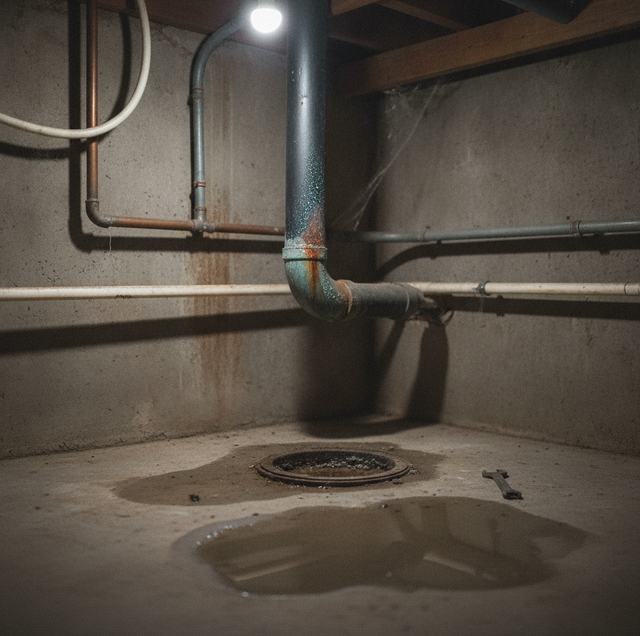
A bad smell coming out of a drain almost always traces back to one of two things: something is rotting inside the pipe, or sewer gas is escaping past a barrier that is supposed to hold it back. Once you know which of those you are dealing with, the fix becomes obvious. Chase the wrong one, and you can scrub a drain for a week while the real source keeps stinking.
Quick Answer: If the smell is rotten or musty at one sink, you likely have buildup coating the pipe walls, and the drain needs cleaning. If it is a raw sewer smell from a rarely used drain, the water seal in the trap has probably evaporated, and pouring water down it usually solves the problem. A sewage smell across several drains points to a vent or main line issue and needs a pro.
The Two Reasons a Drain Ever Smells
Every stinking drain fits one of two buckets, and telling them apart is what points you at the right fix.
The first bucket is decay. Food, grease, hair, soap scum, and the slimy bacterial film called biofilm collect inside the pipe. That layer keeps eating and breaking down, and the byproduct is odor. This is the source behind most kitchen and bathroom smells, and it produces a rotten or musty note rather than a raw sewage stench.
The second bucket is escaping sewer gas. Your drain system connects to the sewer, which is full of gas by design. The thing that keeps that gas out of your rooms is a small plug of water sitting in a U-shaped bend under each fixture, called the P-trap. That water seal is the key barrier in the entire system. When it fails, or when the system cannot breathe properly, sewer gas rises straight up through the drain opening and into the room. This is the source of a sharp, unmistakable sewer smell.
Think of the water in a P-trap like the water in the bottom of a toilet bowl. As long as it sits there, it caps the pipe below, and nothing foul comes up. Let it drain away, and the pipe is open to whatever is underneath. A P-trap does the same job for a sink, shower, or floor drain, quietly, out of sight.
Match the Smell and Location to the Cause
The type of odor and where it shows up narrow things down fast.
Rotten or musty smell in a kitchen or bathroom drain- This is buildup. Grease and food scraps in the kitchen, hair and soap scum in the bath, all feed a biofilm layer on the pipe walls. It tends to be strongest right at the drain opening and often worse when water runs and disturbs the slime.
A raw sewer smell from a rarely used drain- A guest bath, a basement floor drain, a laundry sink you seldom touch. If nobody runs water through a fixture for weeks, the water in its P-trap slowly evaporates. Once the seal is gone, sewer gas has a clear path up. This is one of the most common causes people never suspect.
Gurgling plus odor at several fixtures- This points to the vent. Every drain system has a vent stack, usually running up through the roof, that lets air in so water flows smoothly and gas exits above the house. If that vent is blocked by a nest, leaves, or debris, or was never installed correctly, the system cannot pull air in the normal way. Instead, it siphons air backward through the traps, dragging sewer gas into the room and pulling water out of the seals as it goes. Gurgling drains are the tell.
A smell tied to slow drainage- A partial clog holds rotting waste in the pipe. The water above it stagnates, the trapped debris decays, and the drain smells until the blockage clears.
A stubborn kitchen smell near the disposal- A garbage disposal collects food debris in spots where water never fully reaches. That trapped food rots in place.
A persistent sewage smell across the whole house or in the yard- This is the serious one. It suggests a problem in the main sewer line or the vent system rather than any single fixture, and it does not respond to cleaning one drain at a time.
There is also the rotten-egg or sulfur smell, which deserves its own note. That sulfur odor comes from bacteria producing hydrogen sulfide. It can live in the drain itself, or, if the smell only appears with hot water, it can come from bacteria inside the water heater. The hot-only clue is what separates a water heater issue from a drain issue.
How to Diagnose It Yourself
Before you clean anything, spend two minutes narrowing the source. A few plain questions do most of the work.
Which drain is it? Trace the smell to a specific fixture if you can. One drain points to that drain's buildup or trap. Many drains at one point upstream to a vent or the main line.
Does it come and go, or is it constant? An odor that flares when you run water usually means that the buildup is being disturbed. A constant background stench, especially from an unused fixture, leans toward a dry trap or a vent problem.
Here is the single most useful test: find the smelly drain, especially if it is one you rarely use, and pour a couple of quarts of water down it. Wait a few minutes. If the smell fades, you had a dry P-trap, and you just refilled the seal. That one action rules in or rules out the most common hidden cause in about five minutes.
If the drain also gurgles, note that. Gurgling shifts your suspicion toward the vent and away from simple buildup.
Fixing Each Cause
Once you know the source, the repair is specific.
For a dirty drain, clean out the buildup. Pour a generous amount of baking soda down the drain, followed by very hot water to loosen grease and biofilm. For a more thorough job, use an enzyme drain cleaner, which uses bacteria and enzymes to digest the organic film over several hours rather than blasting it. Heavy biofilm that keeps coming back is a job for a professional cleaning that scours the full pipe wall.
For a dry trap, refill it. Run water through the fixture, and for a floor drain you never use, pour water in every month or two to keep the seal topped up. If the trap continues to lose water even with regular use, the trap or its seal may be damaged and require repair.
For a garbage disposal, clean the areas below the parts you can see, then run it with ice and a bit of citrus peel to loosen debris and freshen it.
For a vent or sewer problem, call a professional. Clearing a roof vent, correcting a missing or undersized vent, or inspecting a main line is not a do-it-yourself territory. A plumber can run a camera down the line to see exactly where a sewer issue sits and confirm whether the trouble is the vent or the main.
The whole point of diagnosing first is to sort a dirty drain (clean it) from a dry trap (refill it) from a vent or sewer fault (get a pro). All three can smell similar. Only one of them is fixed by scrubbing.
A Few Safety Notes
Sewer gas is mostly a nuisance at the low levels a home odor represents, but a strong, persistent sewage smell is a signal worth taking seriously, both because it can mean a real sewer fault and because the gas is unpleasant to live with. Do not ignore a smell that will not go away.
Never mix drain chemicals. Combining products or layering a chemical cleaner on top of one already in the pipe can create dangerous fumes. If a chemical cleaner did not work, do not chase it with a second one. Stick to baking soda and hot water or enzyme cleaners for home use, and let a plumber handle anything stubborn.
Vent and sewer work belongs to a professional. Roof access, main line camera work, and vent corrections carry real risk and require the right tools.
Frequently Asked Questions
The P-trap is the U-shaped bend of pipe directly under a drain, and it holds a small plug of water that blocks sewer gas from rising into the room. In a drain you rarely use, that trapped water slowly evaporates until the seal disappears, and once it is gone, the gas has a straight path up. For a capped or seldom-used floor drain, one trick that buys time is to float a little mineral oil on top of the trap water: oil evaporates far more slowly than water, so the seal holds for months instead of weeks between refills.
A film of grease, food particles, and biofilm coats the inside of the pipe well below anything you can reach by wiping the strainer or the top of the disposal. That hidden layer keeps rotting and giving off odor, no matter how clean the visible parts look. Clearing it takes a full drain cleaning or an enzyme treatment that breaks down the film along the pipe wall, not just surface wiping.
Gurgling combined with odor points to a blocked or missing vent. The system cannot breathe, so instead of venting air through the roof, it draws air back through the traps to make up the difference. A vent problem usually shows up first at the fixture farthest from the stack or highest in the house, since that is where the suction is weakest. Where running a new vent line is impractical, an air-admittance valve (AAV) is a code-permitted partial fix in some locations, letting air in on demand without an open path for gas.
Food debris lodges under the rubber splash guard, along the grind ring, and in the crevices of the disposal where running water never fully rinses it away. That trapped food rots in place and keeps smelling even after a normal run. Cleaning under the flap and grinding ice cubes with citrus peel scours those hidden spots far better than just running water down the unit.
A sulfur or rotten-egg smell usually comes from bacteria in the drain. When it shows up only on the hot side, it typically traces to the sacrificial anode rod inside the water heater reacting with bacteria in the tank; swapping a standard magnesium anode for an aluminum or zinc one usually clears it. At low levels, a household drain produces a gas that is mainly unpleasant rather than hazardous, but a strong, persistent sewage odor warrants checking for a real sewer or vent fault.
When you get a steady sewage odor across several drains at once, or notice it out in the yard, and cleaning individual drains does nothing, the trouble is likely in the main sewer line rather than any one fixture. A telltale outdoor clue is a soggy patch or a strip of grass that is noticeably greener than the rest running over the buried lateral line, which points to a break leaking underground. A plumber sends the camera in through the cleanout to find the exact spot so the real problem gets fixed instead of masked.
Call for a drain diagnosis — pinpoint the smell and clear it at the source. Done Right Drains and Plumbing serves Chula Vista, San Diego, National City. Call (619) 737-3274.
