
Water Pressure Suddenly Low? What’s Behind It
Quick Answer: A sudden drop in water pressure usually points to something restricting or diverting the water before it reaches your fixtures. Common causes are a failing pressure regulator, a partially closed main or meter valve (often after recent plumbing work), a clogged fixture aerator or a buildup of sediment and scale narrowing pipes, a hidden leak bleeding off pressure, or a municipal supply issue. Whether the low pressure affects the whole house or just one fixture is the biggest clue: whole-house points to shared causes like the regulator, main valve, or supply, while one fixture points to a local clog. Pinpointing it means checking from the simplest causes outward, and a plumber can test and locate the problem.
When your water pressure suddenly drops — weak showers, a trickle at the faucets — it's a sign something has changed in your plumbing. Pressure can fall for a range of reasons, from a simple clogged aerator to a failing regulator or a hidden leak. The good news is that the pattern of the problem helps narrow the cause. Understanding the common causes of low water pressure helps you identify what's restricting your flow. Here's what to consider.
Whole House or One Fixture?
The first and most useful question is whether the low pressure affects your whole house or just one fixture. This single observation points you in the right direction. If the pressure is low everywhere — every faucet, shower, and fixture — the cause is likely something shared, upstream of the individual fixtures: the pressure regulator, the main shutoff or meter valve, a main-line issue, or the municipal supply. If the low pressure is at just one fixture while others are fine, the cause is more likely local to that fixture, such as a clogged aerator or a localized issue. So determining the scope first saves you from looking in the wrong place. Whole-house low pressure and single-fixture low pressure have different likely causes.
Cause One: The Pressure Regulator
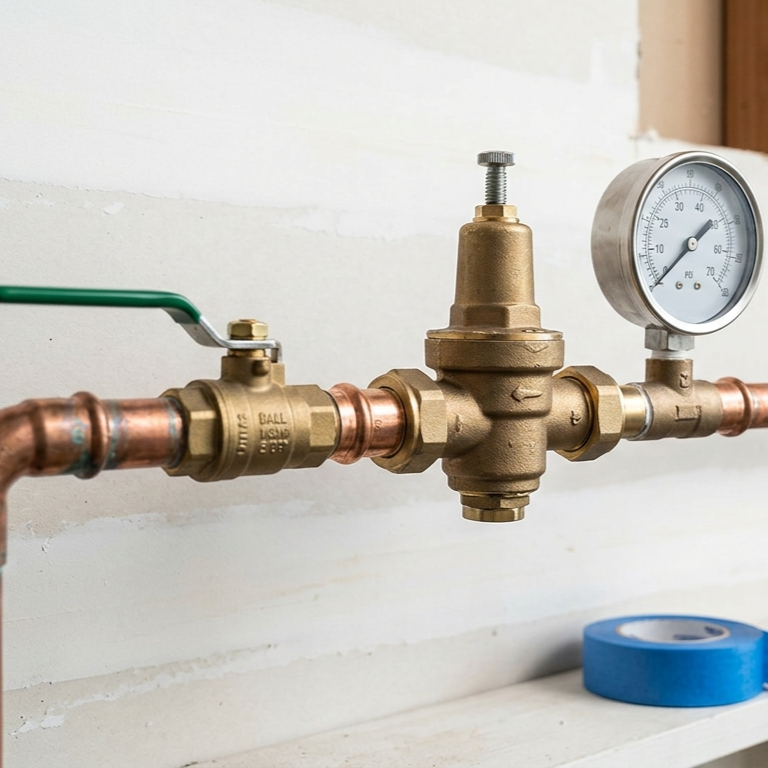
Most homes have a pressure-reducing valve — a regulator — where the main line enters, which keeps incoming pressure at a safe level for your plumbing. When that regulator fails, it can drift, and a regulator that fails low chokes the pressure to the whole house. Because it sits at the entry point and affects all the water, a failing regulator is a common cause of a sudden whole-house pressure drop and one of the first things to suspect for low pressure everywhere. Regulators wear out over time and are a known failure point, so if your pressure suddenly drops throughout the house, the regulator is a prime suspect worth checking.
| Cause | Tell-tale sign |
|---|---|
| Failing pressure regulator | Low pressure at every fixture |
| Valve not fully open | Started after recent plumbing work |
| Clogged aerator (one fixture) | Low pressure at just that faucet |
| Sediment/scale in pipes | Gradual or widespread restriction |
| Hidden leak | Low pressure plus high bill or wet areas |
| Municipal supply issue | Neighbors affected too |
Cause Two: A Valve or a Clog
Two common, often simpler causes are worth checking. A main shutoff or meter valve that isn't fully open restricts flow to the whole house — this happens after recent plumbing work when a valve was partially closed and not fully reopened. Checking that the main and meter valves are fully open is a quick, free first step. For low pressure at a single fixture, a clogged aerator (the screen on the faucet tip) is a frequent culprit — sediment and mineral buildup clog it, dropping the pressure at that faucet; cleaning or replacing the aerator often restores it. More broadly, sediment and mineral scale building up inside pipes, especially older ones, can narrow them and restrict flow over time. So a valve issue or a clog — at the aerator or in the pipes — is a common, often fixable cause.
Cause Three: A Hidden Leak or the Supply
Two more causes are worth considering. A significant hidden leak somewhere in the system bleeds off water and pressure before it reaches your fixtures. If low pressure comes with a higher water bill, the sound of running water, or damp areas, a hidden leak — including a slab leak under the foundation — moves up the list. Finding and repairing it restores both the pressure and the wasted water. And sometimes the issue isn't in your home at all: a municipal supply problem, water main work, or low pressure in your area can reduce what reaches your meter. A good clue is whether neighbors have the same issue — if so, the supply is the likely source, and contacting the water utility is the right step. So a leak or a supply issue can also be behind a sudden pressure drop.
Start with the simplest, free checks. Confirm your main shutoff and meter valves are fully open — a partly closed valve after recent work is a common, easy fix — and clean a clogged aerator if just one faucet is weak. Then ask whether neighbors have low pressure too. These quick checks often point you to the cause before anything is replaced.
How It Gets Diagnosed
Because several things can cause low pressure, diagnosing it means working through the possibilities, ideally from the simplest outward — checking valves and aerators, then the regulator, the pipes, leaks, and the supply. A plumber can test the actual pressure with a gauge, check the regulator's operation, inspect for clogs and leaks, and determine whether the cause is a failing regulator, a valve, a clog, a leak, or a supply issue, which matters because the fix for each is different. Guessing can mean replacing parts that weren't the problem. So, for low pressure that the simple checks don't resolve, a professional can methodically locate where the pressure is being lost and address it, restoring proper flow to your fixtures.
Frequently Asked Questions
Because something is restricting or diverting the water before it reaches your fixtures. Common causes are a failing pressure regulator, a partially closed main or meter valve, a clogged aerator or sediment and scale narrowing pipes, a hidden leak, or a municipal supply issue. Whether the low pressure is whole-house or at one fixture is the biggest clue to which cause is behind it.
Check whether the low pressure affects the whole house. A failing regulator typically drops pressure at every fixture, since it sits at the main entry and affects all the water. If only one fixture is weak, the cause is more likely local, like a clogged aerator. A plumber can test the regulator's output with a gauge to confirm whether it's the cause of whole-house low pressure.
Yes, at the affected fixture. The aerator is the screen on the faucet tip, and sediment and mineral buildup can clog it, dropping the pressure at just that faucet, while others are fine. It's a common cause of low pressure at a single fixture, and cleaning or replacing the aerator often restores the flow. So if only one faucet is weak, check its aerator first.
It can. A significant hidden leak diverts water and pressure away from your fixtures before they reach them. If the low pressure comes with a higher-than-normal water bill, the sound of running water, or damp areas, a hidden leak — possibly a slab leak under the foundation — is worth investigating. Finding and repairing the leak restores both the pressure and the water being lost.
Whole-house low pressure points to a shared cause upstream of the individual fixtures: a failing pressure regulator, a main or meter valve that isn't fully open, sediment or scale narrowing the main pipes, a significant leak, or a municipal supply issue. Because it affects everything at once, the cause is in the shared parts of the system, which is why the search starts there rather than at individual fixtures.
If the simple checks — confirming valves are open, cleaning an aerator, and checking whether neighbors are affected — don't restore the pressure, a plumber can help. They can test the pressure with a gauge, check the regulator, inspect for clogs and leaks, and determine where the pressure is being lost. Because the fix differs by cause, professional diagnosis avoids replacing parts that weren't the problem.
Find What's Restricting the Flow
A sudden drop in water pressure means something has changed in your plumbing — a failing regulator, a partly closed valve, a clogged aerator or scaled pipes, a hidden leak, or a supply issue. The biggest clue is whether it's whole-house (shared causes like the regulator or main valve) or one fixture (a local clog). Start with the simple, free checks, and for anything they don't resolve, a plumber can test and locate where the pressure is being lost and restore proper flow.
Water pressure suddenly weak? — Get the regulator, valves, pipes, and lines checked to find where the pressure went. Done Right Drains and Plumbing serves Chula Vista, San Diego, National City. Call (619) 737-3274.
