
How Hard Water Damages Your Plumbing (and the Warning Signs)
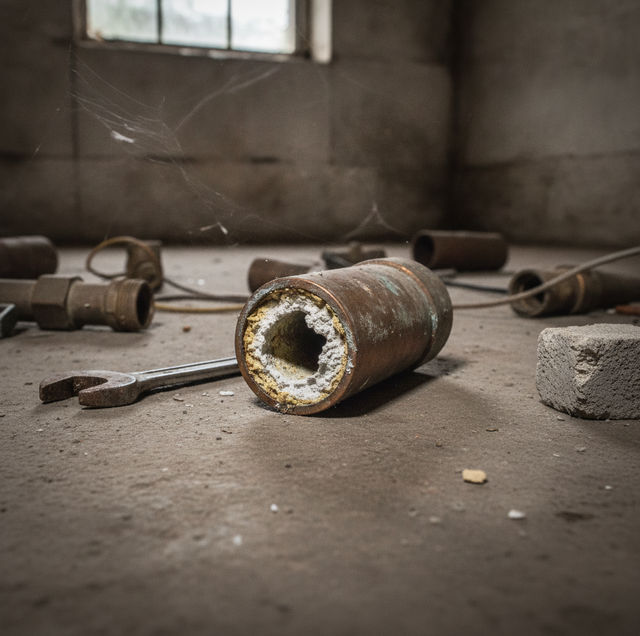
Turn on a tap almost anywhere, and the water looks the same. What you cannot see is what it carries. Water that percolates through limestone and other rock picks up dissolved calcium and magnesium, and the more of those minerals it holds, the "harder" it is. Hardness is measured in grains per gallon (gpg); water is usually considered hard once it exceeds roughly 7 gpg, and many supplies run 10 to 20 gpg or higher. Those minerals do not stay dissolved forever. Heat and evaporation coax them out of solution, and they harden into scale on every surface the water touches. Over the years, that quiet chemistry works its way through your whole plumbing system.
What Hardness Actually Is, and Why It Turns Into Scale
Calcium and magnesium ride along in your water as ions until something forces them out. Heat is the biggest trigger. When water is warmed, dissolved calcium bicarbonate converts to calcium carbonate, which does not remain dissolved and drops out as a chalky solid. That is why the hottest parts of your system, the water heater and the pipes feeding it, scale fastest. Evaporation does the same job at fixtures, leaving the white, crusty crust you see rimming a faucet spout or drying on the shower door.
Scale is not grease or soap film you can wipe away. It is a hard mineral deposit, mostly calcium carbonate, that bonds to metal, plastic, and glass alike. Once a thin layer forms, it gives the next layer something to grip, so buildup accelerates on surfaces that already have some.
How Scale Narrows and Damages Your Pipes
Inside supply lines, scale builds up on the pipe wall and gradually narrows the opening through which the water flows, called the bore. A pipe that started with a full-diameter path can lose a meaningful share of its diameter to a mineral lining, and a narrower bore means less flow and lower pressure at the tap. You may first notice it as a shower that has quietly lost its punch, or a tub that takes longer to fill than it used to.
Older galvanized steel pipe, common in many established neighborhoods, is especially vulnerable. Scale combines with internal corrosion to choke these lines, and once the buildup is advanced, it cannot be cleaned out of the wall; the pipe must be replaced. Copper and modern plastic hold up better to the minerals themselves, but they still collect scale at fittings, valves, and any spot where water sits and warms.
The Water Heater Takes the Hardest Hit
No appliance suffers from hard water more than the water heater, because it does exactly what scale needs: it heats the water. In a standard tank, mineral sediment settles to the bottom and forms a crusty layer over the burner or around the electric element. That layer insulates the heat source from the water, so the burner has to run longer to reach the desired temperature, which wastes energy and puts more strain on the tank. The classic symptom is a popping or rumbling sound at the bottom of the tank, caused by water bubbling up through and under the sediment bed. A tank that spends years fighting through a blanket of scale generally wears out sooner than one running on soft water.
Tankless units are not exempt. They heat water quickly through a narrow internal heat exchanger, and even a thin scale layer there restricts flow and quickly reduces efficiency. That is why tankless heaters in hard-water areas need periodic descaling, a flush that circulates a mild acid solution through the exchanger to dissolve the mineral coating.
Fixtures, Aerators, and the Appliances You Rely On
The damage shows up at the small openings first. The aerator, the little screened tip that screws onto a faucet, clogs with mineral flecks and starts to spray sideways or trickle. Showerheads do the same as scale plugs the individual nozzles, which is why a once-strong spray turns patchy. Toilet fill valves, angle stops, and the tiny passages inside a single-handle faucet cartridge all collect deposits that make them stick or drip.
The minerals reach beyond the pipes, too. Dishwashers and washing machines run hard water through their own valves and heating elements, and the scale that accumulates shortens their service life. Because hard water keeps soap and detergent from lathering and rinsing cleanly, it leaves spots on glassware, a film on dishes, and a stiff, dingy feel in laundry, and it pushes you to use more product to get the same result.
Testing Your Water and Choosing a Treatment
You do not have to guess at how hard your water is. An inexpensive test strip changes color to give you an approximate grains-per-gallon reading, and a plumber can confirm it with a more precise test. Once you know the number, two main approaches address it, and they work very differently.
A traditional water softener uses ion exchange. Water passes through a tank of resin beads that grab the calcium and magnesium and release sodium in their place, so the water leaving the tank truly has the hardness minerals removed. The system periodically flushes and recharges the resin with a brine made from the salt you add, which is why a softener has a salt tank you refill.
A salt-free conditioner works on a different principle. Instead of removing the minerals, it changes their form, encouraging calcium to crystallize into tiny, stable particles that remain suspended and do not readily bond to pipe and fixture surfaces. The minerals are still in the water, so the water is not technically softened, but far fewer new scale sticks. Conditioners suit households that want to cut scale without adding sodium or maintaining a salt tank, while a true softener is the choice when you also want the slick feel and full lathering that only mineral removal delivers.
Living With Hard Water Without Losing Your Plumbing
Hard water is not a plumbing emergency; it is a slow tax on the whole system, and it responds well to attention. Knowing your hardness number, treating the water at the source, and clearing scale from fixtures before it builds up are the levers that keep pipes flowing and appliances lasting closer to their designed life. If your pressure has faded, your water heater has started to rumble, or crust keeps returning at every faucet, the water itself is likely telling you what it is made of.
Frequently Asked Questions
A few household signs point to it before you ever buy a strip. Soap that refuses to lather and instead leaves a curd-like scum, spots, and a cloudy film on glasses straight out of the dishwasher, and a chalky white ring that returns quickly around faucets and drains are all classic signs. A quick home check: shake a little dish soap and water in a clear bottle. Soft water makes fluffy suds that hold; hard water yields thin bubbles that collapse fast. For a real number, a grains-per-gallon strip or a plumber's test settles it.
No. The calcium and magnesium in hard water are the same minerals found in food, and drinking it poses no health risk; some people actually prefer its taste. Hard water is strictly a plumbing and appliance problem, not a safety one. Worth noting for the salt-conscious: an ion-exchange softener adds a small amount of sodium to the water it treats, so some homeowners leave one kitchen tap or the outdoor lines on unsoftened water for drinking and the garden.
For fixtures, plain white vinegar dissolves calcium carbonate. Unscrew the aerator or showerhead and soak it in vinegar for a few hours, or tie a vinegar-filled bag over a showerhead you cannot easily remove, then scrub the loosened deposits with an old toothbrush. For a tank water heater, draining and flushing it clears the loose sediment from the bottom; connect a hose to the drain valve, empty the tank, and let fresh water stir up and carry out the grit. Heavy scale bonded to a heating element or hardened inside a valve usually needs a plumber, since aggressive scraping can damage the parts.
Flush the tank through its drain valve about once a year, and more often if your water runs on the hard end, since sediment piles up faster there. That cadence has a limit, though: a yearly flush carries away loose grit, but once the deposit fuses into a hard crust across the tank bottom, a routine drain-and-rinse may not lift it at all, and the tank then needs professional deliming or is simply near the end of its life. The fuel type changes what the sediment does. In an electric heater, the elements sit in the water and get covered by deposits, so they overheat and burn out early. On a gas heater, the burner fires from below, so the sediment layer acts as insulation between the flame and the water, wasting fuel and overheating the steel at the tank bottom instead.
In a sense, yes, because a tankless unit has far less room to tolerate buildup. Its compact heat exchanger has narrow water passages, so even a thin scale layer restricts flow and drops efficiency noticeably, and many manufacturers recommend descaling at least yearly in hard-water areas, sometimes more often. A tank heater has volume to spare and can run for a while with sediment on the bottom, though at a growing efficiency penalty. Whichever type you have, hard water shortens the interval between needed service.
A whole-house system installed on the main line treats every drop entering the home, which is what protects the pipes, water heater, and appliances, since scale forms throughout the plumbing rather than at one tap. A point-of-use unit under a single sink cannot do that; it only conditions water at that one fixture and does nothing for the water heater or the lines feeding the rest of the house. If your goal is to protect the plumbing system, treatment belongs at the point of entry. Point-of-use filters still have a role for taste or specific contaminants at the drinking tap, but they are not a substitute for whole-house-scale control.
Have your water tested and your plumbing checked for scale — Done Right Drains and Plumbing serves Chula Vista, San Diego, National City. Call (619) 737-3274.
