
What a Water Softener Does and Whether You Actually Need One
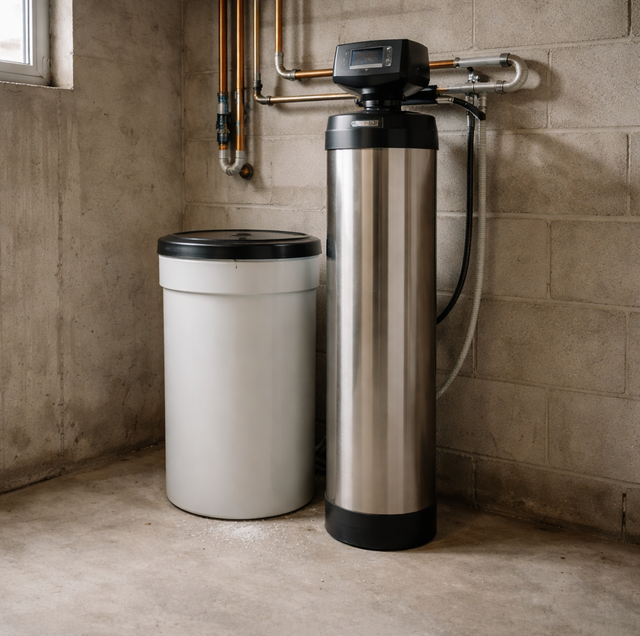
Quick Answer: A water softener removes dissolved calcium and magnesium, the two minerals that make water "hard," by swapping them for sodium ions through a process called ion exchange. It stops scale buildup in pipes, water heaters, and fixtures. You need one if your water leaves crusty deposits, spots glassware, and refuses to lather soap.
What Makes Water "Hard" in the First Place
Water is rarely just water. As it moves through soil and rock, it picks up dissolved minerals, and the two that matter most for your plumbing are calcium and magnesium. When those minerals are present in high enough amounts, the water is called "hard." The higher the concentration, the harder the water, measured in grains per gallon or milligrams per liter.
Hardness itself is not a health hazard. Calcium and magnesium are the same minerals people take as supplements. The trouble is what they do once they leave the tap and dry out. As hard water evaporates or gets heated, those dissolved minerals fall out of solution and cling to whatever surface they were touching. That residue is scale, and it is the reason hard water quietly wears down a plumbing system over years.
What Hard Water Actually Does Around the House
Most people notice the symptoms long before they know the cause. A few of the common ones:
Scale inside pipes and the water heater: Every time hard water gets heated, minerals precipitate faster. Inside a tank water heater, that scale settles at the bottom and hardens into a crust that insulates the water from the burner or element, so the unit works harder to hit the same temperature. Inside pipes, scale narrows the interior diameter over time, which can drop water pressure at the fixture.
Spots and film on glass and fixtures: The white specks on glassware straight out of the dishwasher, the cloudy film on the shower door, the chalky ring around the faucet base: all of that is dried mineral. It wipes off, but it comes right back because the water keeps depositing more.
Soap that will not lather: Calcium and magnesium react with soap to form a sticky curd instead of suds. That is the film left on skin and tile, and it is why hard water tends to eat through more soap and detergent to get the same clean.
Dry skin, dull hair, shorter appliance life: The same soap curd that clings to tile clings to skin and hair, which can leave both feeling filmy or dry. Appliances that heat and move water- dishwashers, washing machines, coffee makers, and especially the water heater- tend to reach the end of their service life sooner when scale is constantly building inside them.
None of these show up overnight. Hard water is a slow stressor, working year-round whether it is January or July, which is exactly why it goes unnoticed until a fixture clogs or a heater fails early.
How a Water Softener Works
A softener does one core job: it pulls the calcium and magnesium out before the water reaches your fixtures. The method is ion exchange, and the idea is simpler than the name.
Inside the softener sits a tank packed with thousands of tiny plastic resin beads. Each bead carries a mild negative charge and starts coated in sodium ions. As hard water flows through the bead bed, the calcium and magnesium, which carry a stronger charge, get grabbed and held by the resin, and the beads release their sodium ions into the water in trade. Think of it as a revolving door where the hardness minerals walk in and get stuck, while sodium walks out in their place. The water that leaves is soft.
Eventually every bead is loaded with calcium and magnesium and has no sodium left to trade. At that point the softener runs a cycle called regeneration: it flushes the resin with a strong salt solution, or brine, drawn from a separate tank. The flood of sodium in the brine knocks the trapped calcium and magnesium loose; they rinse down the drain, and the beads are recharged with fresh sodium, ready to start over.
The parts that make it happen
- Mineral tank (resin tank): the tall tank holding the resin beads where softening actually occurs.
- Brine tank: the shorter tank where you add salt, which dissolves into the brine used for regeneration.
- Control valve (or head): the brain on top. A timer-based head regenerates on a fixed schedule, while a metered head tracks how many gallons you have used and regenerates only when the resin is actually spent, which wastes less salt and water.
How to Tell If You Have Hard Water
The visual signs are reliable enough to raise suspicion:
- White, crusty buildup on faucet aerators, shower heads, and around drains
- A cloudy film on glass shower doors, dishes, and mirrors
- Spotting on glassware and stainless surfaces after they dry
- Soap and shampoo that refuse to work up a good lather
- A faint scale ring inside the kettle or coffee maker
Test your water hardness before you buy. An inexpensive strip gives a rough reading in seconds, and a mail-in lab test gives a precise grains-per-gallon figure, which tells you whether you have a real hardness problem worth treating and sets the correct capacity if you do install a unit.
Salt-Based Softeners vs. Salt-Free "Conditioners"
This is where a lot of confusion lives, so the distinction is worth drawing clearly.
A true water softener is salt-based and uses ion exchange, so it physically removes calcium and magnesium from the water. The hardness leaves the house down the drain during regeneration. The water that reaches your fixtures is measurably softer.
A salt-free "conditioner" does not remove anything. Most use a process that changes the structure of the hardness minerals so they are less likely to stick to surfaces, a technique often called template-assisted crystallization. The minerals are still in the water, but they are conditioned to form crystals that tend to rinse away instead of bonding as scale. That can measurably cut scale in some setups, and it uses no salt and no regeneration wastewater, but it will not fix soap-lather problems or give you the classic "slippery" soft-water feel, because the calcium and magnesium are still present. Both approaches are legitimate. They just solve different halves of the problem, so match the choice to what bothers you.
Maintenance a Softener Needs
A softener is low-effort, not no-effort:
- Keep the salt topped up: Check the brine tank monthly and refill before it runs empty, or the unit will start passing hard water. Use the salt type the manufacturer specifies.
- Watch for salt bridges: Salt can occasionally form a hard crust that arches over an empty pocket in the brine tank, so the softener thinks it has salt when it does not. Break it up if you spot it.
- Keep the brine tank clean: Rinse it out periodically to clear sediment that settles from the salt.
- Service the resin and valve occasionally: Resin beads gradually lose capacity over many years, and the control valve has seals and a rotor that eventually wear. A periodic check by a plumber keeps regeneration running correctly.
The Sodium Question and a Few Safety Notes
Ion exchange trades hardness minerals for sodium, so softened water carries a small amount of added sodium; the harder your water, the more it adds. For most people, this is negligible. For anyone on a sodium-restricted diet, it is worth considering. Two common ways to handle it: run a separate unsoftened tap at the kitchen sink for drinking and cooking, or use potassium chloride in the brine tank instead of sodium chloride, which softens the same way while adding potassium rather than sodium.
A few practical cautions:
- A softener ties into your main water line, so installation is professional work. It needs a proper bypass and drain connection, and the setup has to protect against backflow. This is not a swap-it-yourself fixture.
- There is no reason to soften water going to outdoor spigots and irrigation. Plants and lawns do not benefit, and softening that water only wastes salt, so it is standard to plumb the softener so it serves the house but not the irrigation lines.
- Keep the brine tank clean and covered so nothing contaminates the salt supply that regenerates your resin.
Do You Actually Need One
Reach for the test kit before the checkbook. If your water tests soft or only mildly hard and you are not seeing scale or lather problems, a softener may be solving a problem you do not have. If your water tests truly hard, and you are replacing water heaters early, fighting scale on every fixture, and burning through soap, a softener usually pays back in longer appliance life and less cleaning. The answer comes down to your actual hardness number and which symptoms you are living with, not on a general rule.
Frequently Asked Questions
Water is generally considered soft below about 1 grain per gallon, moderately hard from roughly 3.5 to 7, hard from 7 to about 10.5, and very hard above that. A lab test reports the exact figure, which also sets the correct softener capacity so the unit is not undersized for the household.
No. A standard ion-exchange softener targets calcium and magnesium only. Chlorine taste and odor need a carbon filter, and biological contaminants need disinfection or a dedicated treatment system. Iron is a partial exception: some softeners handle low levels of dissolved iron, but heavy iron usually needs a separate iron filter ahead of the softener to keep the resin from fouling.
A single regeneration cycle typically discharges somewhere in the range of 25 to 65 gallons, depending on the unit's size and settings. A metered head cuts total waste because it regenerates only when the resin is actually exhausted rather than on a fixed calendar, which matters if your household water use swings week to week.
Yes, and it is normal. Without calcium and magnesium to form soap curd, soap rinses cleanly and leaves a slick feel on skin that some people read as "not fully rinsed." It is actually the absence of the sticky film hard water leaves behind, not leftover soap.
Generally yes, but the regeneration discharge and its salt content go into the septic system, so the unit should be sized and set to regenerate efficiently. A metered head that regenerates less often reduces the volume and salt load reaching the tank, which is the setup most plumbers favor for septic homes.
The resin beads commonly hold up for 10 to 15 years before losing enough capacity to warrant replacement, and a well-maintained control valve can run a similar span. The brine tank itself often outlasts both. Periodic service and keeping sediment out of the brine tank are what push a unit toward the longer end of that range.
Get your water tested and your options explained before you buy — a right-sized system beats an oversized guess. Done Right Drains & Plumbing serves Chula Vista, San Diego, and Bonita. Call (619) 737-3274.
