
Why Flush Your Water Heater? 5 Signs You Waited Too Long
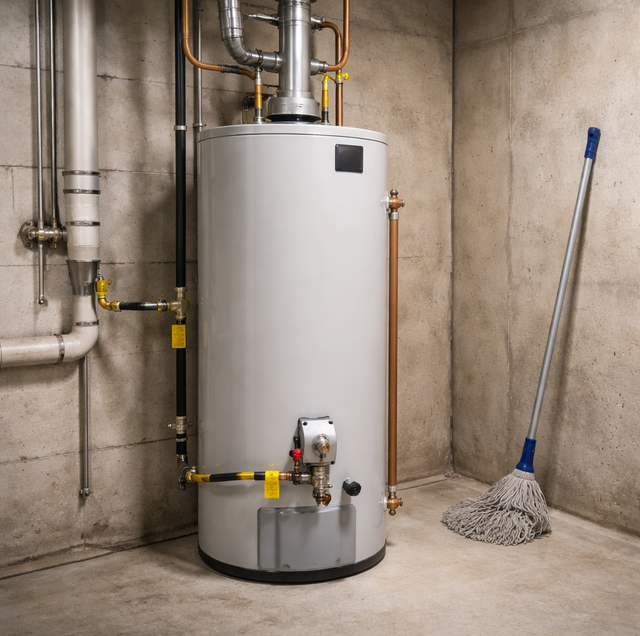
Quick Answer: Flushing clears the layer of hardened mineral sediment that settles at the bottom of a water heater tank. Left in place, it insulates the heat source, wastes energy, shortens the tank's life, and can clog the drain valve. Most tanks benefit from a flush about once a year, and more often on hard water.
A water heater does its job quietly for years, which is why the problem inside it goes unnoticed. Every time the tank reheats, it leaves something behind, and over months that residue turns into a hard crust across the bottom, sitting directly between the heat source and the water it is supposed to warm. Flushing is the routine that removes it, and understanding what that crust does makes the case far better than any maintenance checklist.
What Sediment Is And Where It Comes From
Tap water is not pure H2O. It carries dissolved minerals, mostly calcium and magnesium, picked up as groundwater moves through rock and soil. Sitting cold in the pipes, those minerals stay dissolved and invisible, but heat changes the chemistry. As water warms inside the tank, some of them fall out of solution and settle as fine solid particles. Gravity pulls them to the lowest point in the tank, where they accumulate as a gritty, sand-like layer on the bottom.
This is the same process that leaves white scale on a kettle or crust around a faucet aerator, only it happens inside a sealed steel cylinder you never open. The harder the water, the faster the layer grows. Water is called "hard" when it carries a high mineral load, and a home on hard water can lay down a noticeable sediment bed in a single year. Softer water still produces sediment, just more slowly.
Why hard water makes it worse: A water softener, where one is installed, swaps the calcium and magnesium for sodium before the water reaches the heater, which slows buildup considerably. Without softening, the mineral load arrives in full. That is why two identical heaters in two homes can be in completely different condition after the same number of years: the one on hard, untreated water carries a thick sediment bed, while the softened one stays comparatively clean.
What That Sediment Actually Does To The Tank
A thin dusting of minerals is harmless. The trouble is what a thick, baked-on layer does over time, working against the heater in several ways at once.
It forces the heat source to work harder: In a gas water heater, the burner sits underneath the tank and heats the steel floor, which passes that heat up into the water. A sediment layer acts like a blanket laid over that floor, insulating the water from the flame. The burner has to run longer and hotter to push heat through the crust, which is wasted energy every cycle. In an electric water heater, the setup differs: the heating elements sit inside the tank, submerged in the water. Sediment piles up and can bury the lower element, so it fires while packed in mineral crust instead of sitting in open water. A buried element overheats, scales over, and burns out early.
It makes noise: That rumbling, popping, or percolating sound from an older heater is not the tank failing on the spot; it is sediment. Water gets trapped underneath the crust, superheats, and forces its way up through the layer in bursts of steam bubbles, the way a covered pot rattles its lid. The knocking is those bubbles escaping. It is one of the clearest audible signs that a flush is overdue.
It steals capacity: Every inch of sediment on the bottom is volume that can no longer hold water. A tank rated for a set number of gallons is partly filled with rock, so it stores less hot water than its label claims. That is why an aging heater seems to run out of hot water sooner than it used to, even though nothing about the household changed.
It drives up the bill: The insulating effect and longer burn times mean the same amount of hot water costs more energy to produce. The efficiency loss is gradual, so a slowly climbing utility bill rarely gets traced back to the crust in the tank.
It accelerates corrosion and clogs the drain valve. Sediment traps moisture against the steel and creates pockets where corrosion sets in faster, working against the tank from the inside. It also settles right around the drain valve at the base, so when someone finally tries to drain the tank, the valve is packed or jammed and barely trickles.
The Symptoms Homeowners Actually Notice
Nobody sees the sediment, so the case for flushing lives in the symptoms it produces. A few show up together as a tank ages:
- Rumbling, popping, or crackling while the heater runs, loudest right after it kicks on.
- Hot water running out sooner than it once did, because usable tank volume has shrunk.
- A higher energy bill with no change in how much hot water the household uses.
- Rusty, cloudy, or metallic-smelling hot water at the tap, while the cold side runs clear, pointing to sediment and corrosion inside the tank rather than a problem in the supply line.
None is proof on its own, but two or three together strongly suggest a heavy sediment load.
How Flushing Fixes It, And How Often
Flushing is exactly what it sounds like: draining the tank and running water through it to sweep the loose sediment out through the drain valve at the base. The heat source is shut off first, cold water is run in to stir up and carry out the settled grit, and the flow continues until it runs clear instead of gritty or rusty. Done regularly, before the layer hardens into a crust, it keeps the bottom of the tank clean and the heater working as designed.
Flush a tank water heater about once a year, and more often on hard, untreated water where the sediment rebuilds faster. A home with a working softener can often stretch the interval, so let how fast your water lays down minerals set the cadence rather than the calendar.
Flushing involves scald-hot water and, on a gas unit, the burner and pilot. Switch the heater to pilot or off and let the water cool before draining anything, because water straight from a working tank can cause serious burns. On an electric unit, cut power to the heater first so the elements never fire while exposed to air.
The Anode Rod: A Separate Job That Protects The Same Tank
Flushing handles sediment. It does not address the other quiet process eating at the tank: corrosion, which is the anode rod's territory. The anode rod threads into the top of the tank and is made of a metal that corrodes more readily than steel. It is designed to be sacrificial: corrosion attacks the rod first and spares the steel tank wall. Over the years, the rod slowly dissolves, and once it is used up, the corrosion moves on to the tank itself.
The two tasks are separate but related. Flushing keeps sediment from accelerating corrosion, while a sound anode rod fights the corrosion directly. A tank whose rod was checked and replaced when needed, and whose sediment was flushed regularly, will generally outlast one that got neither. Checking the rod is a heavier job than a flush, usually folded into a professional service visit.
When A Tank Is Too Far Gone To Save
Flushing is maintenance, not a repair, and it cannot reverse damage already done. A few signs point to a tank past the point where flushing helps:
- Rusty water that never clears during a flush, or rust-colored hot water at the tap, suggests corrosion has reached the tank wall itself. Once the steel is rusting through, cleaning it out changes nothing.
- Any weeping, dampness, or a puddle at the base of the tank means the tank is leaking, and a leaking tank does not get flushed; it gets replaced.
- A heater well past its expected service life that has never been flushed may have sediment so hardened and cemented that a flush barely moves it, and disturbing a long-neglected tank can even reveal leaks the crust was quietly plugging.
Flushing is a tool for a tank still in good structural shape. Once corrosion or a leak is in play, the question shifts from maintenance to replacement.
Tankless Heaters: Descaling Is The Equivalent
A tankless water heater has no tank sitting full of water, so it cannot collect a bed of sediment the way a storage tank does. It is not immune to minerals, though. Tankless units heat water on demand by running it across a compact heat exchanger, and hard water leaves scale on the inside walls of that exchanger. Scale narrows the passages and insulates the exchanger the same way sediment insulates a tank floor, cutting efficiency and, if it goes far enough, restricting flow.
The maintenance answer for tankless is descaling: circulating a mild descaling solution through the unit to dissolve scale off the heat exchanger. It is the tankless counterpart to flushing a tank, aimed at the same enemy in a different place. On hard water, descaling is typically recommended about once a year, the same rough cadence as flushing a tank.
Frequently Asked Questions
Often, yes, if the sediment is still loose. Removing the grit takes away the trapped-water pockets that superheat and pop, so the rumbling usually quiets down soon after. If a heater stays noisy after a flush, the sediment has likely hardened into a solid crust that water alone will not lift, which is a sign the tank was neglected too long for a simple flush to recover.
It can, in two ways. Many tank warranties treat routine maintenance as a condition, and a manufacturer that finds a failed unit choked with sediment can point to skipped upkeep when a claim is filed, so a dated service record helps. Flushing also protects the anode rod's job: a bottom buried in scale changes how the tank corrodes and can shorten the covered life the warranty is based on. Keeping a simple log of flush dates gives you something to show if you ever need to make a claim.
For a maintained tank flushed on schedule, the drain-and-rinse is usually roughly 20 to 45 minutes of active work once the water has cooled, plus reheating time afterward. A tank thick with hardened sediment takes considerably longer, since the water has to run until it finally clears, and some crust may need to be broken up before it will move.
The inexpensive plastic drain valves fitted to many tanks are a common failure point. They can crack, seize, or fail to reseat after being opened, especially the first time an old one is used. Sediment packed around the valve seat is often what keeps it from closing fully afterward. A brass or full-port ball valve holds up far better, and swapping a troublesome plastic valve for one is a common upgrade during service.
Temperature does influence how fast minerals drop out of solution, and running a tank hotter than needed can speed sediment formation somewhat. Setting a very high temperature carries a scald risk and is generally discouraged for that reason alone. Lowering an over-hot setting to a safe, moderate level can modestly slow buildup as a side benefit, though it is no substitute for flushing.
You still should, just usually less often. A softener removes most of the calcium and magnesium that form sediment, so a softened tank builds its layer far more slowly, but "slower" is not "never." Fine particles and any minerals that slip through still settle over time, so a periodic flush remains worthwhile insurance on a softened system rather than something you can skip entirely.
Book a water heater flush before the tank starts rumbling — protect its life and hold onto your hot water. Done Right Drains and Plumbing serves Chula Vista, San Diego, and National City. Call (619) 737-3274.
